Why a Player's First Touch Looks Clean in Drills but Falls Apart Under Real Defensive Pressure
A player’s first touch can look genuinely clean and controlled during a cone drill done alone on an empty field, and that same touch can fall apart the instant a real defender closes in during an actual match, which feels like a mysterious skill gap — but it’s really a training gap, because unopposed drills and real defensive pressure are testing two different things entirely.

Why Unopposed Drills Train Mechanics Without Decision Speed
The gap: cone-drills-and-solo-touches-train-the-physical-mechanics-of-controlling-a-ball-cleanly-but-never-require-the-split-second-decision-of-where-to-place-it-under-pressure (cone drills and solo touch repetitions training the physical mechanics of controlling a ball cleanly in isolation, but never actually requiring the split-second decision of exactly where to place that touch while a real defender closes in, per the soccer-skills-solo-practice logic — cone-drills-and-solo-touch-repetitions-training-the-physical-mechanics-of-controlling-a-ball-cleanly-in-isolation-but-never-requiring-the-split-second-decision-of-where-to-place-it-while-a-real-defender-closes-in), and the reframe (clean mechanics alone being necessary but not sufficient for pressure situations)).

Why That Decision-Speed Gap Only Surfaces in Real Play
The surprise: the-gap-between-mechanical-touch-and-pressured-decision-making-stays-completely-invisible-during-solo-practice-and-only-appears-once-an-actual-opponent-is-closing-distance (the gap between mechanical touch quality and actual pressured decision-making staying completely invisible during any solo practice session, and only appearing once a real opponent is genuinely closing distance during a live match, per the soccer-fitness-training logic — the-gap-between-mechanical-touch-quality-and-actual-pressured-decision-making-staying-completely-invisible-during-solo-practice-and-only-appearing-once-a-real-opponent-is-genuinely-closing-distance), and the frame (a skill that tests fine in isolation and fails only once a live variable is introduced)).
How a Passive-Defender Drill Closes the Gap Directly
The drill: add-a-passive-defender-who-applies-light-non-contact-pressure-during-touch-drills-so-decision-speed-gets-trained-alongside-mechanics-rather-than-in-isolation (adding a passive defender who applies only light, non-contact pressure during regular touch drills, so that decision speed under pressure gets trained directly alongside the mechanics themselves, rather than being left entirely for isolated solo practice, per the the-first-touch-before-speed-guide logic — adding-a-passive-defender-who-applies-only-light-non-contact-pressure-during-regular-touch-drills-so-that-decision-speed-under-pressure-gets-trained-directly-alongside-the-mechanics-themselves), and the frame (closing the actual gap identified, instead of repeating more of the drill that already works fine)).
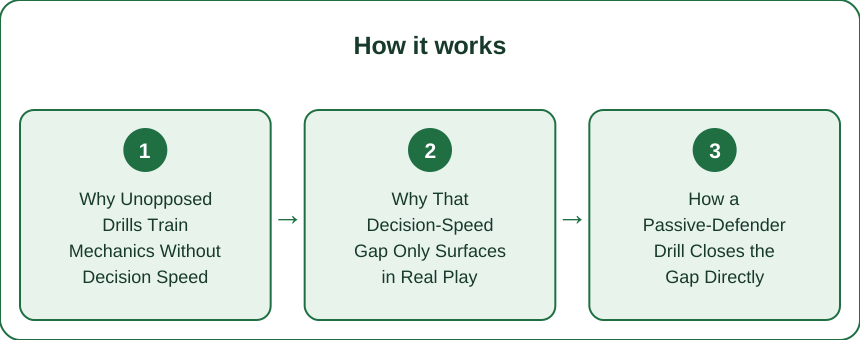
Cone drills and solo touches train the physical mechanics of ball control in isolation, but never require the split-second decision of where to place a touch while a real defender closes in, which is why that decision-speed gap stays invisible in solo practice and only appears in a live match. Adding a passive defender who applies light pressure during regular touch drills trains that decision speed directly alongside the mechanics, closing the actual gap rather than repeating more of the drill that already works.
Keep Reading
This article is for general informational and styling purposes only. Fit, sizing, and product availability may vary.