What to Actually Do the Day After a Hard Soccer Match or Training Session
Quick Answer: The day after a hard match, prioritize light active movement (a 15-20 minute easy walk or swim) over full rest, plus extra protein and fluids to address soccer’s specific combination of sprint-repeat muscle damage and dehydration. Full passive rest actually slows recovery compared to light movement.
The instinct after a brutal match is to do nothing — but soccer’s specific demands (repeated sprints, sudden direction changes, 90 minutes of accumulated impact) respond better to a deliberately light active day than a fully sedentary one.

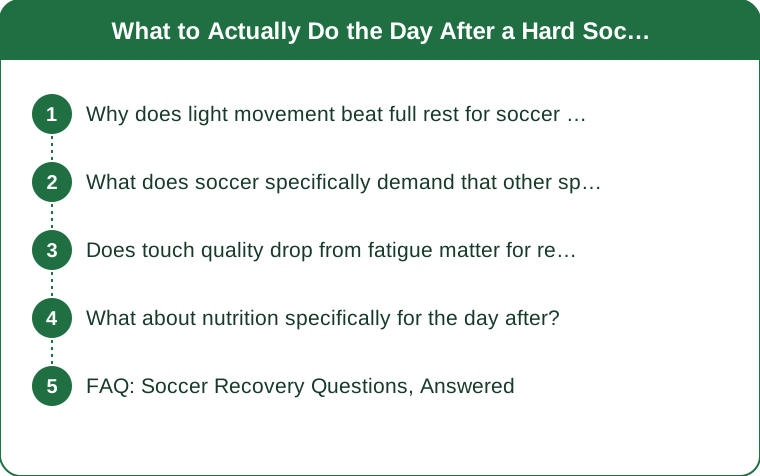
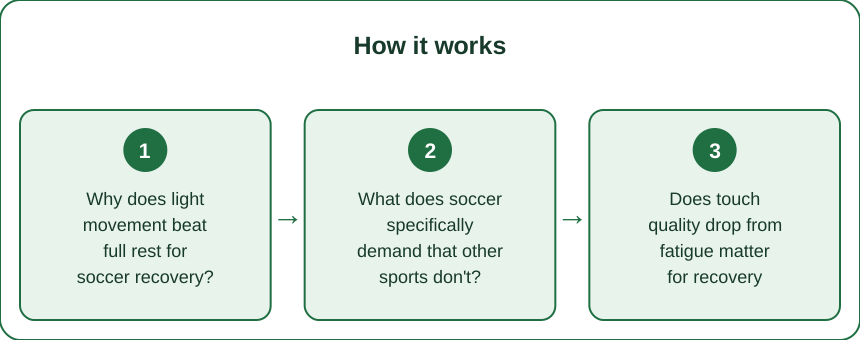
Why does light movement beat full rest for soccer recovery?
Active recovery increases blood flow to damaged muscle tissue, which helps clear metabolic byproducts (like the ones responsible for next-day soreness) faster than sitting still does. Soccer’s sprint-repeat pattern creates a specific type of muscle micro-damage that responds well to gentle movement — enough to promote circulation, not enough to add new stress.
A 15-20 minute easy walk, light swim, or easy bike spin the day after checks this box. The key word is easy — this isn’t a second workout, it’s deliberately low-intensity movement.
What does soccer specifically demand that other sports don’t?
The combination matters: soccer mixes repeated high-speed sprinting, sudden deceleration, and rotational cutting across 90 minutes, which creates a broader pattern of muscle stress than a single-mode sport like running. Hamstrings and quads take repeated eccentric loading from deceleration specifically, which is a major reason soccer players are more prone to hamstring strains than steady-pace endurance athletes.
This is why generic ‘runner’s recovery’ advice (mostly focused on aerobic fatigue) misses part of the picture — soccer recovery needs to account for the eccentric, direction-change component too, not just distance covered.
Does touch quality drop from fatigue matter for recovery planning?
It’s a useful signal, not just a game-day observation: if your touch and decision-making noticeably degraded in the second half of a match, that’s a marker of significant central and peripheral fatigue accumulated — a stronger recovery day (more protein, more sleep, lighter subsequent training) is warranted compared to a match where fatigue barely showed.
Using in-game fatigue signs to calibrate next-day recovery intensity is more accurate than a fixed one-size-fits-all recovery routine applied after every match regardless of how hard it actually was.
What about nutrition specifically for the day after?
Protein intake (20-30g within a few hours of the match, continued through the next day) supports the muscle repair that soccer’s eccentric loading specifically requires. Rehydration matters more than people expect too — soccer’s combination of duration and intermittent sprinting produces meaningfully more fluid loss than a single steady-state activity of the same total time.
A simple marker: pale yellow urine by the next morning is a reasonable sign rehydration is on track; noticeably dark still the next day suggests you’re still behind on fluids from the match.
FAQ: Soccer Recovery Questions, Answered
Should I ice sore muscles the day after a match?
Evidence on ice for general muscle soreness (versus acute injury) is mixed — it may blunt some of the adaptation signal from training. For general post-match soreness without a specific injury, light movement and stretching are generally favored over routine icing.
How much sleep does soccer recovery actually need?
More than baseline — athletes engaged in repeated high-intensity efforts generally benefit from 8-9+ hours, and sleep debt compounds noticeably faster around match days than on lighter training days.
When should soreness be checked by a professional instead of just managed?
Sharp, localized pain (especially hamstring or groin) that doesn’t ease with light movement over 2-3 days is a different category than general soreness — that warrants a proper evaluation rather than continued self-managed recovery.
TL;DR:
- Light active movement (15-20 min easy) beats full passive rest the day after
- Soccer’s sprint-deceleration-rotation combo creates broader stress than single-mode sports
- Use how much your touch degraded late in the match to calibrate recovery intensity
- Prioritize protein (20-30g soon after) and rehydration — soccer loses more fluid than expected
Recovery isn’t about doing nothing — it’s about doing the right small amount, matched to what the match actually demanded.
Keep Reading
This article is for general informational and styling purposes only. Fit, sizing, and product availability may vary.