Your First Touch Matters More Than Your Shot — Here's Why Beginners Skip It
Quick Answer: A clean first touch sets up every other skill — shooting, passing, dribbling — because a bad touch means you’re chasing the ball instead of playing it. Beginners should spend 2-3x more practice time on receiving than shooting.
You practice shooting drills for an hour, but in actual games the ball bounces off your foot before you ever get a shot away. That’s not a shooting problem — it’s a first-touch problem, and it’s the skill most beginner training skips.

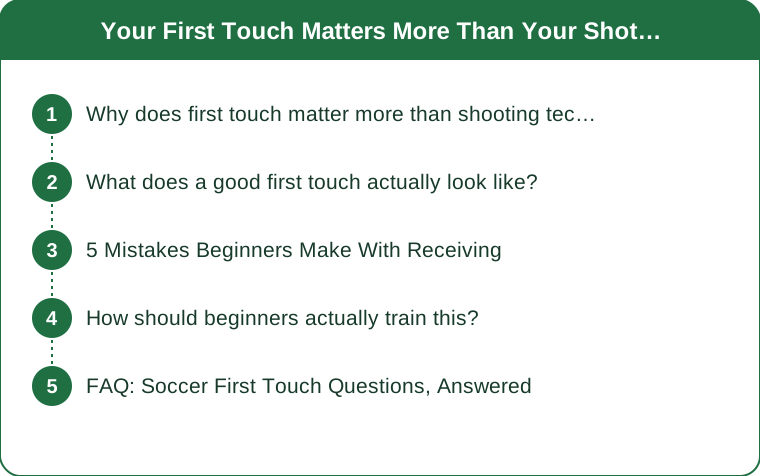
Why does first touch matter more than shooting technique?
Because every action in soccer starts with receiving the ball well. A poor first touch pushes the ball too far from your body, giving defenders time to close in before you can pass, dribble, or shoot at all.
Elite youth curricula devote significantly more early training time to ball control than finishing, precisely because shooting is irrelevant if you never get a clean touch to shoot from.
What does a good first touch actually look like?
The ball should land within one step of your body, already angled toward where you want to go next — not stopped dead at your feet, and not bounced away.
This means “cushioning” the touch (absorbing pace with a soft foot surface) rather than blocking it, and choosing the touch’s direction before the ball even arrives.

5 Mistakes Beginners Make With Receiving
1. Watching the ball instead of the field. Check your surroundings before the ball arrives, not after.
2. Stopping the ball dead. A stopped ball means starting from zero speed again — a touch that keeps it moving is faster overall.
3. Using the wrong foot surface. The inside of the foot gives the most control; beginners overuse the toe out of habit.
4. No plan for the next touch. Receiving without deciding your next move wastes the whole advantage of a good touch.
5. Only practicing with a stationary ball. Real touches happen off passes with pace and spin — practice receiving moving balls, not just dribbling drills.
How should beginners actually train this?
Wall passes are the single best low-equipment drill: pass against a wall, control the rebound with one touch, and immediately move it in a new direction. 10-15 minutes daily builds this faster than an hour of occasional shooting practice.
Add variation — different pass speeds, different angles — once the basic touch feels automatic.
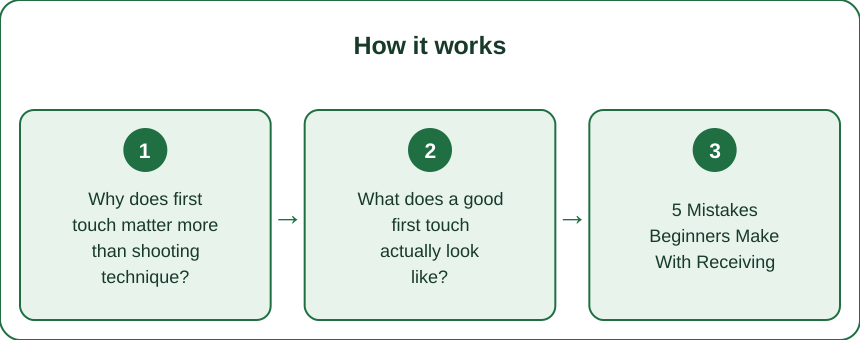
FAQ: Soccer First Touch Questions, Answered
How long does it take to develop a reliable first touch?
With consistent daily practice, noticeable improvement in 3-4 weeks is realistic for adult beginners; real comfort under game pressure takes a few months of regular play.
Should I still practice shooting as a beginner?
Yes, but proportionally less — a rough 2:1 or 3:1 ratio of touch/control work to shooting work reflects how the skills actually compound in games.
Does first touch matter as much in casual rec league play?
Arguably more — casual games have less structured space, so a bad touch gets punished (ball lost) faster than in a slower-paced drill setting.
TL;DR:
- A clean first touch enables everything else; shooting is irrelevant without it
- Good touch = ball within one step, already angled toward your next move
- Watch the field before the ball arrives, don’t stop it dead
- Wall-pass drills for 10-15 min daily beat occasional shooting sessions
Spend your next few practice sessions on touch, not goals — the shots will follow.
Keep Reading
This article is for general informational and styling purposes only. Fit, sizing, and product availability may vary.